
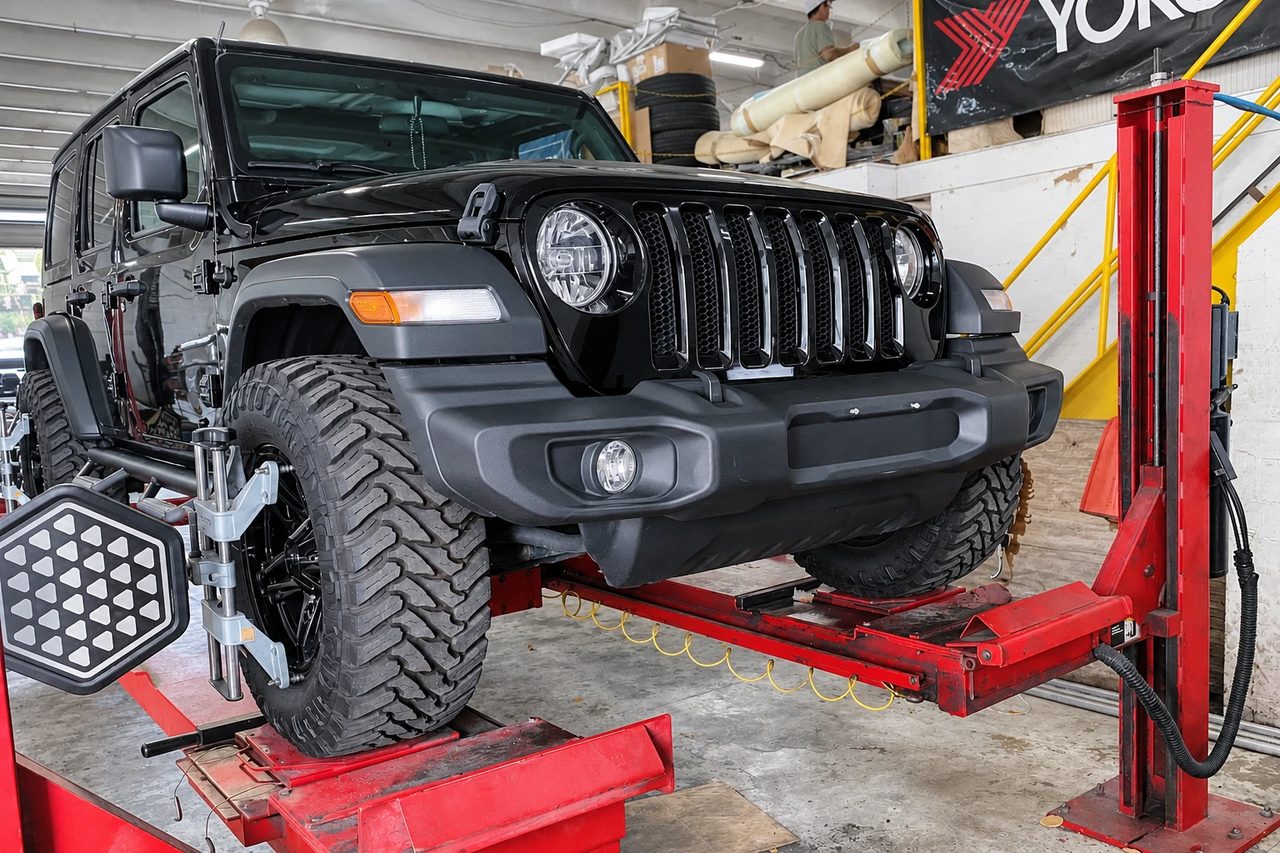
Tell Mac Tires how you use your truck or SUV and share its tire specifications, load requirements and modifications. The right choice must suit the vehicle as well as the terrain. Ask about highway or all-terrain options, installed pricing and current stock. Larger tires or higher load ratings do not increase the vehicle’s towing or payload limits.
When to get in touch
- Cupping or feathering on the edges
- A shake that shows up on I-95
- You have added a lift or gone up a size
- The truck wanders when the bed is loaded
- Tread is down and you tow through the summer
Services available
- Vehicle specification and intended-use discussion
- Tire options and load-capacity checks
- Mounting and balancing quote
- Pressure, fitment and alignment questions
How it goes
No appointment needed, and no surprises on the invoice.
- 1
Call or drive in
Tell us what is going on, or the size on your sidewall if it is tires. We will quote you on the phone.
- 2
We look at it with you
Tread, pads, codes or readings, whatever the job needs. You see what we see before anything is ordered.
- 3
Know the next step
Confirm the service, installed price and expected timing with the shop before work begins.
Questions people ask
Do I need load range E tires on my truck?
Use the load capacity and tire specification required for the exact truck and its intended load. Load range E is not automatically required for every towing vehicle. Do not reduce capacity below the vehicle requirements or assume a tire upgrade increases the truck’s rated limits.
All terrain or highway tires for a truck in South Florida?
Compare individual tire models for the roads and terrain you use, including wet-road performance, noise and load requirements. Highway and all-terrain categories involve tradeoffs, but a category name alone does not establish which tire performs best for your truck.
Will bigger tires throw off my speedometer?
Changing overall tire diameter can affect speedometer and odometer readings, clearance and vehicle systems. The effect depends on the old and new sizes. Share the proposed tire and wheel dimensions so compatibility, calibration and any alignment work can be assessed before purchase.
What tire pressure should I run when I am towing?
Follow the vehicle manufacturer’s cold-pressure guidance for the specified tires and load. Do not automatically inflate toward the tire sidewall maximum or lower pressure when empty. If tires or loads differ from the original specification, ask a qualified tire professional to determine the appropriate settings.
Still not sure?
Call (954) 468-7920 and ask for Kevin. A straight answer costs nothing, and we will tell you if we are not the right shop for the job.
Call (954) 468-7920Other services
Do not see your job listed? Call us. If we are not the right shop for it we will say so.
- New tiresTires for daily drivers and performance vehicles, matched to your driving and budget.
- Used tiresAsk about available used tires and whether a specific tire is suitable for your vehicle.
- Wheel alignmentAlignment service for pulling, an off-center steering wheel and uneven tire wear.
- Check engine diagnosticsFind out why the light is on before you pay for a repair.
- Tire repair and flatsFlat-tire assessment and repair when the damage and tire condition allow it.
- Oil and filterThe right oil for your engine, and a quick check while it is in.
- Balancing and TPMSFor a wheel that shakes at speed, and the light that will not go out.
- Boat and utility trailer tiresBoat and utility trailer tire options matched to the trailer’s specifications and load.
- Batteries and chargingBattery, alternator and starter testing.
- Brakes and rotorsPads, rotors and calipers, on the same visit as your tires.
- Pre-purchase inspectionA full inspection before you buy a used car.
- Heating and A/CA/C that actually blows cold, which in South Florida is not optional.
- Suspension and steeringShocks, struts, ball joints and tie rods, the parts an alignment depends on.